From Quality Indicators to Advocacy: CODE-YAA Policy Briefs Are Now Available!
How can evidence on the quality of palliative care education be translated into meaningful change?
The CODE-YAA@PC-EDU Advocacy Group has developed three policy briefs to help turn the project’s quality indicators into practical advocacy tools. These resources are now available to support efforts to strengthen palliative care education and encourage their use in educational and policy discussions.
Three policy briefs, tailored to different audiences
Recognizing that different stakeholders have distinct roles, priorities, and opportunities to influence change, the Advocacy Group developed three versions of the policy briefs:
- Educational institutions: To support discussions about educational quality, curriculum development, and the integration of palliative care into professional training.
- Policymakers: To highlight the importance of strengthening palliative care education and inform decisions that can support educational and policy change.
- Clinicians and researchers: To encourage the use of quality indicators in identifying educational gaps, improving training, and promoting evidence-informed advocacy.
Each brief presents concise, accessible messages and recommendations adapted to its intended audience. Personal stories are also incorporated to connect the evidence with the people and experiences behind the need for better palliative care education.
Evidence is the starting point. Advocacy helps turn it into action.
The CODE-YAA quality indicators provide a foundation for assessing and improving palliative care education. The policy briefs take this work a step further by making the findings accessible to those who can advocate for change.
As Tania Pastrana, lead of the Advocacy Group, states:
“Developing evidence-based quality indicators is an important achievement, but evidence alone does not lead to change. We need to translate research findings into clear messages and practical recommendations that different stakeholders can use. These policy briefs are intended to support that process and encourage action to strengthen palliative care education.”
Read, share, and use the policy briefs!
We invite educators, policymakers, clinicians, researchers, professional associations, and everyone interested in strengthening palliative care education to explore the CODE-YAA policy briefs, share them with relevant stakeholders, and use them in their advocacy activities.
Explore the policy briefs:
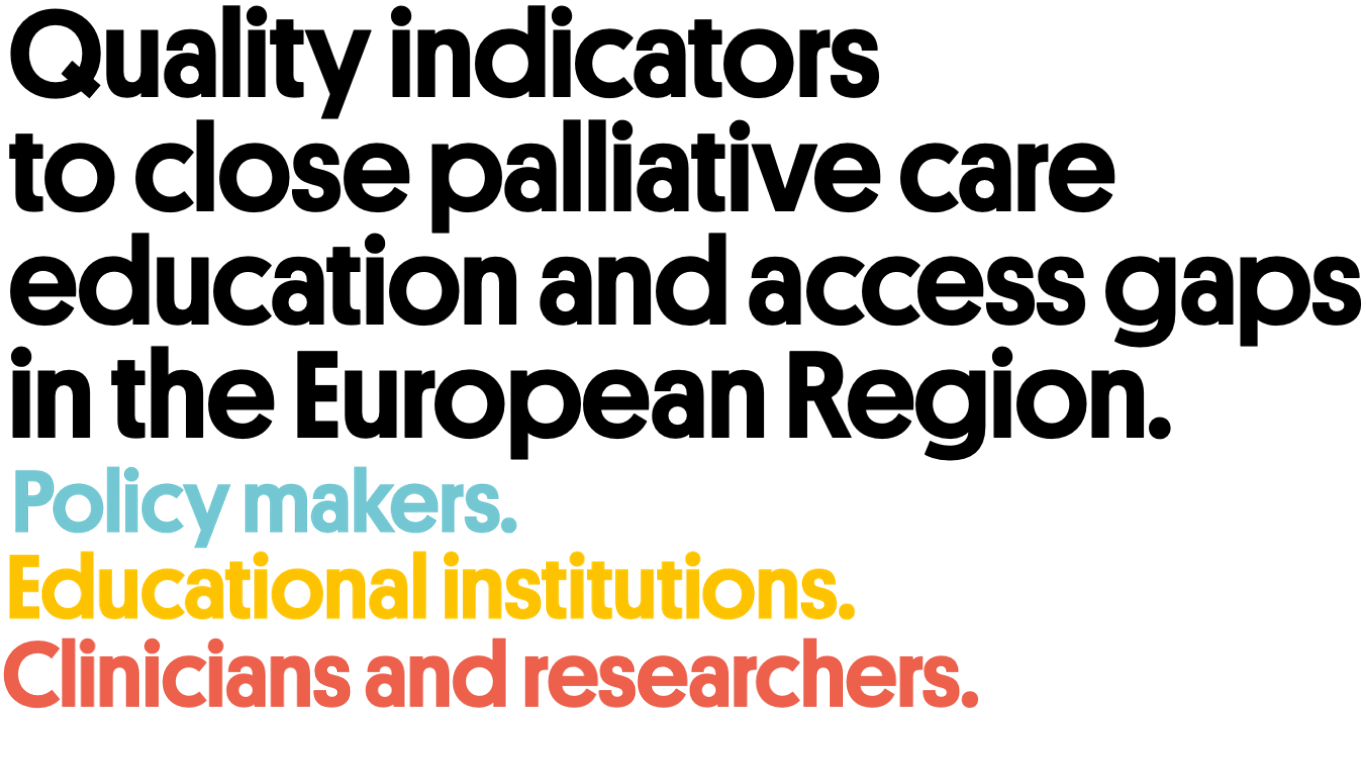
Quality indicators to close palliative care education and access gaps in the European region
Download Educational Institutions: https://codeyaa.eu/wp-content/uploads/2026/10/Policy-Briefs_Educational-Institutions.pdf
Download Policy Makers: https://codeyaa.eu/wp-content/uploads/2026/10/Policy-Briefs_Policy-Makers.pdf
Download Clinicals and Researchers: https://codeyaa.eu/wp-content/uploads/2026/10/Policy-Briefs_Clinicians-and-researchers.pdf