The workshop “Design Thinking in Medical Education and Palliative Care” aimed to introduce participants to the principles of Design Thinking, exploring what it is, how it is defined, and how it can foster creativity and innovation in medical education and palliative care teaching. The session highlighted Design Thinking not only as a methodology, but also as a framework and a set of practical tools capable of addressing complex challenges through multidisciplinary collaboration, creativity, and user-centred problem solving.
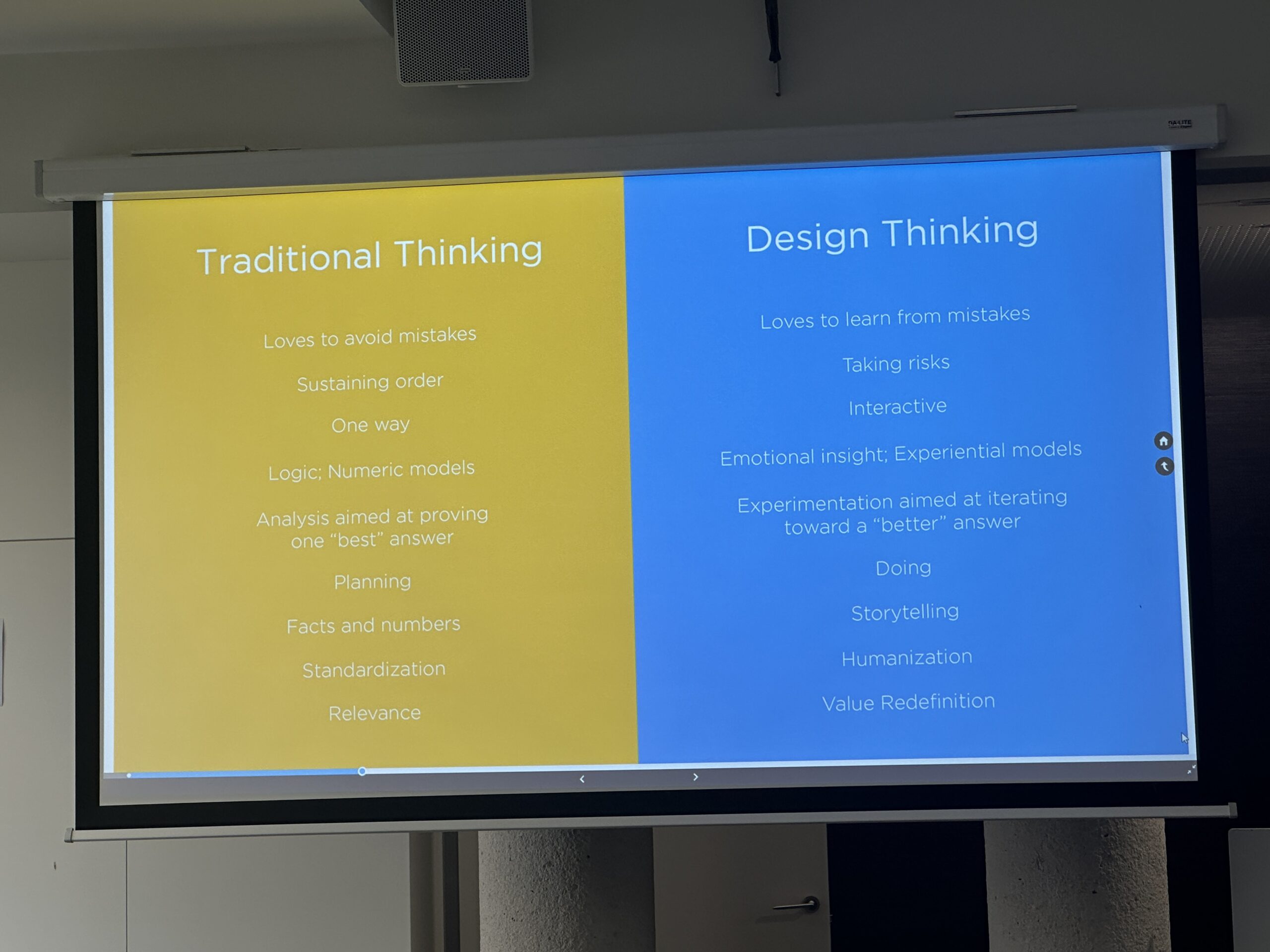
The first part of the workshop was led by Design Thinking expert Santiago Hermida, who described the origins of Design Thinking in the fields of design and business, and innovation, and how it has progressively expanded into healthcare and education because of its effectiveness in generating meaningful change. The session explored the five phases of the Design Thinking process — empathising, defining, ideating, prototyping, and testing — illustrating each phase with concrete examples and practical tools that participants could later apply in their own educational contexts. Particular emphasis was placed on the mindset required for Design Thinking: openness to creativity, flexibility, collaboration, and the ability to learn from failure as an essential part of innovation.
The workshop also presented several experiences developed at the University of Navarra, where Design Thinking has been applied to curricular transformation and methodological innovation in medical education, as well as to the redesign of teaching strategies in palliative care education. These examples demonstrated how the framework can help educators better understand learners’ needs, identify hidden challenges, and create more human-centred and effective educational experiences.
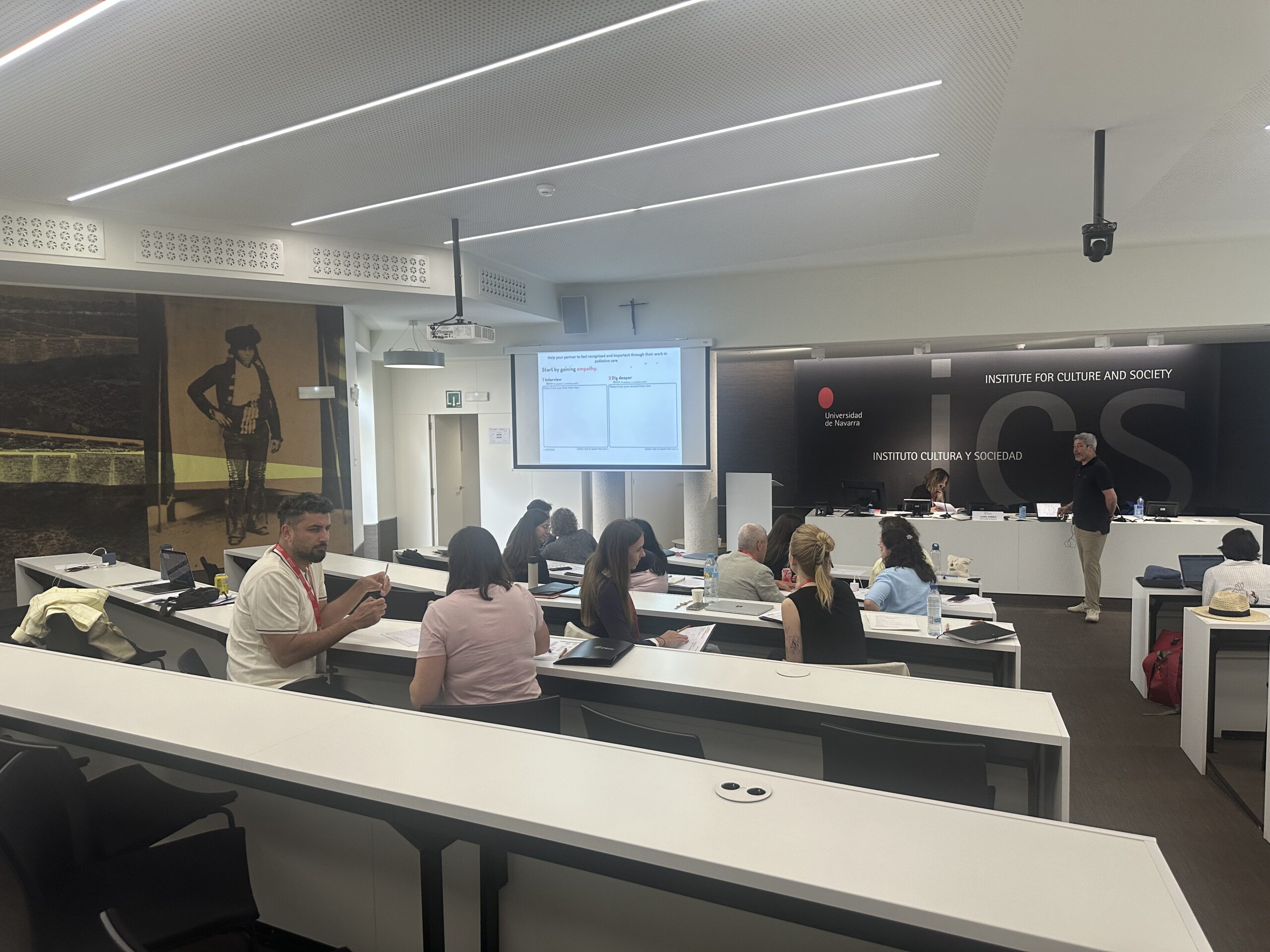
The second part of the workshop was highly participatory and experiential. Inspired by the Stanford d.school Crash Course on Design Thinking, participants engaged in a practical exercise designed to allow them to experience the Design Thinking process firsthand within a limited timeframe. Although condensed into a one-hour activity, the exercise enabled participants to move through the essential stages of empathy, reframing, insight generation, ideation, and prototyping while working on a practical challenge that encouraged personal engagement and reflection. The overall aim was not only to explain Design Thinking conceptually, but also to provide participants with a meaningful pedagogical experience that demonstrated the power of active, creative, and human-centred learning.